The short answer
In Israel, God lived in a tent among his people. Their uncleanness and sins defiled it, so the high priest cleansed it with blood. The New Testament calls believers the temple of God. Christ’s atonement forgives their sins and cleanses them, so that God’s Spirit can live in them. The cleansing comes first and the Spirit follows, as Peter promised: remission of sins, then “the gift of the Holy Ghost” (Acts 2:38). The God who once dwelt among his people now dwells in them.
What Paul Says: You Are the Temple of God
Paul uses the temple to describe Christians three times in his letters to Corinth. To the church as a whole he writes, “Know ye not that ye are the temple of God, and that the Spirit of God dwelleth in you?” (1 Corinthians 3:16). A few chapters later he says the same of each believer’s body:
What? know ye not that your body is the temple of the Holy Ghost which is in you, which ye have of God, and ye are not your own?
1 Corinthians 6:19
In his second letter he quotes God’s promise, “I will dwell in them, and walk in them” (2 Corinthians 6:16). Those words echo the blessing God promised Israel in the law: “I will set my tabernacle among you . . . And I will walk among you, and will be your God, and ye shall be my people” (Leviticus 26:11–12).
Paul’s temple language draws on the tent God told Moses to build in the wilderness, and on the law that kept it clean.
God Asked for a House So He Could Live With His People
The instructions for the tabernacle open with its purpose: “And let them make me a sanctuary; that I may dwell among them” (Exodus 25:8). God brought Israel out of Egypt, he said, “that I may dwell among them” (Exodus 29:46). The tent stood in the middle of the camp, with the tribes arranged around it on every side.
When it was finished, God moved in. “A cloud covered the tent of the congregation, and the glory of the LORD filled the tabernacle” (Exodus 40:34). The cloud rested on it by day, “and fire was on it by night, in the sight of all the house of Israel” (Exodus 40:38). When the cloud lifted, the camp moved, and when it stayed, the camp stayed.
The prophets later spoke of that guiding presence as God’s Spirit. Isaiah remembers that “the Spirit of the LORD caused him to rest: so didst thou lead thy people” (Isaiah 63:14), and Nehemiah sets the pillar of cloud and fire beside God’s “good spirit” given to instruct them (Nehemiah 9:19–20). How Atonement Works reads the cloud and the fire over the tabernacle as God’s Spirit dwelling in the midst of Israel.
Why God’s House Needed Cleansing
Having God in the camp was a blessing, and it was dangerous. After the golden calf, God told Moses, “I will not go up in the midst of thee; for thou art a stiffnecked people: lest I consume thee in the way” (Exodus 33:3). Moses answered, “If thy presence go not with me, carry us not up hence” (Exodus 33:15). Israel could not do without God’s presence, and God’s presence among a sinful people could destroy them.
The law names two things that defiled God’s dwelling. On the Day of Atonement the high priest made atonement for the holy place “because of the uncleanness of the children of Israel, and because of their transgressions in all their sins” (Leviticus 16:16). Uncleanness was a ritual condition that came from things like childbirth, skin disease, or touching a dead body. Sin was wrongdoing against God’s commands. Both reached the sanctuary, even when the people never entered it. God warned Israel to separate themselves from their uncleanness, “that they die not in their uncleanness, when they defile my tabernacle that is among them” (Leviticus 15:31).
If the defilement was left alone, God would leave. Ezekiel watched it happen. In a vision he saw the glory of the LORD rise from the temple in Jerusalem, move to the east gate, and leave the city (Ezekiel 10:18–19; 11:23). So God gave Israel offerings, washings, and blood on the altar and the mercy seat, the means by which he could keep living among a people who kept making his house unfit for him. The page Why Did the Sanctuary Need Cleansing? explains this part of the story in more detail.
Blood That Cleanses the Dwelling
God’s provision for the cleansing was blood. “For the life of the flesh is in the blood: and I have given it to you upon the altar to make an atonement for your souls” (Leviticus 17:11). On the Day of Atonement the blood went to the mercy seat, the tent, and the altar, and the result for the people is stated plainly: “to cleanse you, that ye may be clean from all your sins before the LORD” (Leviticus 16:30).
The book offers an explanation of why blood cleanses. Scripture joins sin, death, and defilement, and God is “the living God,” in whose presence death has no place. If what defiles his dwelling is death and the sin that brings it, then life is what cleanses it, and Leviticus says the blood carries life. Chris White presents this as his own proposal, built on the work of scholars of Leviticus. The page Why Does Blood Make Atonement? sets it out more fully.
An animal’s life had limits, and the next year the house needed cleansing again. Hebrews contrasts that with Christ:
How much more shall the blood of Christ, who through the eternal Spirit offered himself without spot to God, purge your conscience from dead works to serve the living God?
Hebrews 9:14
Jesus, the Temple That Never Needed Cleansing
Jesus was also God’s dwelling. The Word “dwelt among us” (John 1:14), and the Greek verb is the word for pitching a tent. When Jesus spoke of raising the temple in three days, John explains that “he spake of the temple of his body” (John 2:21). At his baptism the Spirit descended “and it abode upon him” (John 1:32). The tabernacle needed cleansing again and again, and Jesus never did. The book suggests the difference is sin: Jesus was “holy, harmless, undefiled, separate from sinners” (Hebrews 7:26). He is the one temple that never needed cleansing, and the cleansing his people need comes from him.
Cleansed First, Then Filled With the Spirit
Under the old covenant God’s Spirit dwelt in the midst of Israel and came upon particular people for particular tasks. The prophets promised more. Through Ezekiel God said:
Then will I sprinkle clean water upon you, and ye shall be clean: from all your filthiness, and from all your idols, will I cleanse you. A new heart also will I give you, and a new spirit will I put within you . . . And I will put my spirit within you, and cause you to walk in my statutes.
Ezekiel 36:25–27
The cleansing comes first in that promise: “ye shall be clean” stands before “I will put my spirit within you.” Peter kept the same order on the day of Pentecost: “Repent, and be baptized every one of you in the name of Jesus Christ for the remission of sins, and ye shall receive the gift of the Holy Ghost” (Acts 2:38). Later he said that God gave the first Gentile believers “the Holy Ghost, even as he did unto us,” having purified “their hearts by faith” (Acts 15:8–9). Paul tells the Ephesians that in Christ they have “redemption through his blood, the forgiveness of sins,” and that after they believed they “were sealed with that holy Spirit of promise” (Ephesians 1:7, 13).
Leviticus used two words for what an offering did. For sin, “it shall be forgiven.” For uncleanness, “he shall be clean.” John uses both: “If we confess our sins, he is faithful and just to forgive us our sins, and to cleanse us from all unrighteousness” (1 John 1:9). In the book’s words, the temple of our bodies is cleansed “so that God’s Spirit can live in us.”
Luke describes the coming of the Spirit at Pentecost this way: “cloven tongues like as of fire” sat on each of the disciples, “and they were all filled with the Holy Ghost” (Acts 2:3–4). Chris White reads that fire as the same sign as the fire that rested on the tabernacle. This is his reading of the two passages together; Luke reports the fire without naming the tabernacle. On that reading, the fire that once rested over one tent in the middle of the camp now rested on each of the people in whom God had come to live.
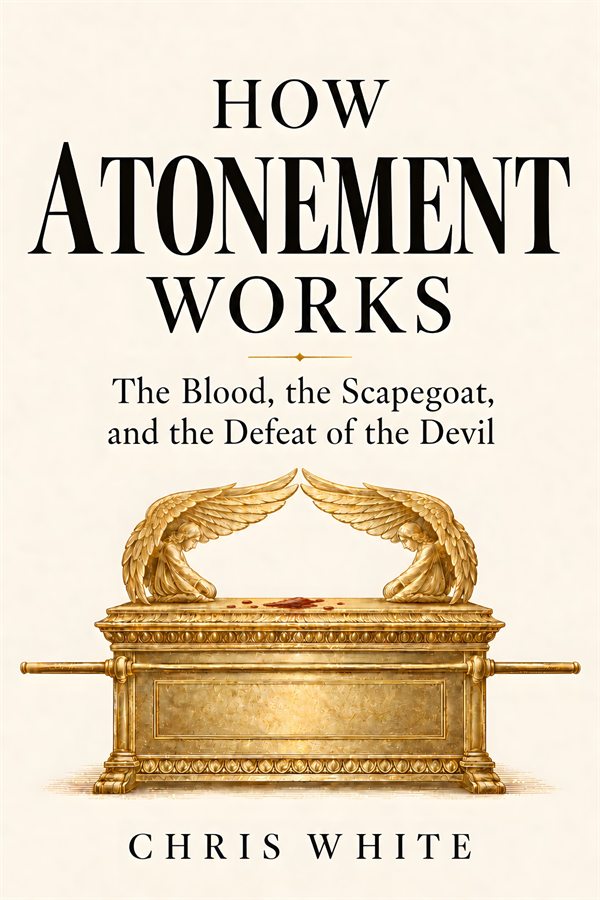
This question is one step in a larger account. How Atonement Works follows the whole Day of Atonement through the work of Christ: the blood that cleanses God’s dwelling, the high priest in heaven, the scapegoat that carried sins away, and the defeat of the devil.
Get the Paperback on AmazonBrought Near: The Temple and Union With Christ
Israel was cleansed so that God could stay in the camp, and the people still stayed outside. Once a year one man went behind the veil, with the warning “that he die not” (Leviticus 16:2). Hebrews describes something new:
Having therefore, brethren, boldness to enter into the holiest by the blood of Jesus, By a new and living way, which he hath consecrated for us, through the veil, that is to say, his flesh; And having an high priest over the house of God; Let us draw near with a true heart in full assurance of faith, having our hearts sprinkled from an evil conscience, and our bodies washed with pure water.
Hebrews 10:19–22
Believers come in washed and sprinkled, as Aaron and his sons were at their consecration. Paul says that those who “were far off are made nigh by the blood of Christ,” and that “through him we both have access by one Spirit unto the Father” (Ephesians 2:13, 18).
The New Testament’s phrase for this is “in Christ.” The book reads the access in Hebrews in that light: Christ is in the holy of holies, and those who are in him come to God in Christ, who is already there. Interpreters differ on whether “his flesh” in Hebrews 10:20 explains “the veil” or “the way,” and on either reading the way into God’s presence is through Christ himself.
The union runs both ways. Jesus told his disciples, “ye shall know that I am in my Father, and ye in me, and I in you” (John 14:20). Paul calls the Spirit who dwells in believers both “the Spirit of God” and “the Spirit of Christ” (Romans 8:9). Christ is in believers by his Spirit, and believers are in Christ. That is what makes a cleansed person a temple. Israel’s high priest carried the names of the tribes into the holy place on his breastplate. In Christ, believers are where he is, and his Spirit lives in them.
How Other Christians Read These Verses
Many Christians read 1 Corinthians 6:19 mainly as a moral teaching. Paul writes it in a passage about sexual sin, and his point there is that a believer’s body belongs to the Lord and should be kept holy. That reading is correct about Paul’s purpose in the verse, and the book agrees with it.
Many Christians also explain the cross chiefly as God dealing with guilt, and they treat the Spirit’s indwelling as a separate gift that follows faith, often described as new birth. On that view the cross removes guilt, and the temple language describes the Christian life afterward.
The book adds the Levitical background. Leviticus names two problems, uncleanness and sin, and the purpose of atonement there was that God could keep dwelling with his people. Read that way, the cross and the indwelling Spirit belong to one saving work: forgiveness and cleansing on one side, the Spirit taking up residence on the other. Chris White holds this as the best reading of the texts.
Living as God’s Temple
Paul draws practical conclusions from the temple. “If any man defile the temple of God, him shall God destroy; for the temple of God is holy, which temple ye are” (1 Corinthians 3:17). After quoting God’s promise to dwell in his people, he writes, “let us cleanse ourselves from all filthiness of the flesh and spirit” (2 Corinthians 7:1).
The cleansing remains open to believers. John writes to Christians that when they sin, “we have an advocate with the Father, Jesus Christ the righteous” (1 John 2:1). The Spirit who lives in them also leads them, as the cloud and the fire led Israel: “For as many as are led by the Spirit of God, they are the sons of God” (Romans 8:14). And the Spirit changes the will. Paul tells the Philippians that “it is God which worketh in you both to will and to do of his good pleasure” (Philippians 2:13), which is what God promised through Ezekiel when he said he would cause his people to walk in his statutes.
The book connects this to remaining in Christ. Jesus said, “If ye abide in me, and my words abide in you, ye shall ask what ye will, and it shall be done unto you” (John 15:7). Those who remain in him are forgiven and cleansed, reconciled to God, and indwelt by his Spirit. The God who asked Israel for a sanctuary so that he could dwell among them now dwells in them.
Where This Understanding Comes From
The connection between atonement and God’s dwelling comes largely from the study of Leviticus. Jacob Milgrom showed that the blood of the purification offering cleansed God’s sanctuary from the people’s impurities and sins so that his presence could remain among them. Jonathan Klawans set out the difference between ritual and moral impurity, and Richard J. Barry IV and Roy Gane have carried the discussion forward, including how the cleansing of the sanctuary relates to the cleansing of the people. David M. Moffitt’s work on Hebrews connects that background to Christ’s entry into the heavenly sanctuary. How Atonement Works builds on this scholarship and credits it, and adds its own proposals about why life cleanses and how the Spirit’s indwelling completes what the tabernacle pictured.