The short answer
The sanctuary was God’s dwelling in the middle of Israel. Leviticus 16:16 says it needed atonement because of two things: the people’s uncleanness and their sins. Uncleanness came from death, birth, disease, and bodily discharges, and it was not sin. Sin was disobedience to God. Both defiled his house, even from a distance (Leviticus 15:31). If the defilement stayed, God would leave. The blood cleansed his house so that he could remain among his people.
A Sanctuary So That God Could Live Among Them
The instructions for the tabernacle begin with its purpose: “And let them make me a sanctuary; that I may dwell among them” (Exodus 25:8). The tabernacle stood in the middle of the camp, with the tribes of Israel arranged around it on every side (Numbers 2). God says he brought Israel out of Egypt “that I may dwell among them” (Exodus 29:46). When the tent was finished, the cloud covered it and “the glory of the LORD filled the tabernacle” (Exodus 40:34).
Having God in the camp was a blessing, and it was dangerous. After the golden calf God told Moses he would not go up in the midst of the people, “lest I consume thee in the way” (Exodus 33:3). When Nadab and Abihu offered strange fire, fire went out from the LORD and devoured them (Leviticus 10:1–2). The law protected the camp for this reason: “therefore shall thy camp be holy: that he see no unclean thing in thee, and turn away from thee” (Deuteronomy 23:14).
So when Leviticus 16:16 says the holy place needed atonement, it describes a house with a resident. The tabernacle “remaineth among them in the midst of their uncleanness,” and something had to be done about that uncleanness if God was to stay.
Two Kinds of Pollution: Uncleanness and Sin
Leviticus 16:16 names two things that defile the sanctuary: “the uncleanness of the children of Israel” and “their transgressions in all their sins.” The law treats them differently.
Uncleanness was a ritual condition. A person became unclean by touching a corpse or a carcass, by giving birth, by having a skin disease, or by a discharge of blood or seed, including menstruation and ordinary marital relations (Leviticus 12–15; Numbers 19:11–22). Most of these could not be avoided, and some were duties. Burying one’s dead was a duty, and so was having children. Jacob Milgrom, the Jewish scholar whose work on Leviticus shaped much modern study of the sacrifices, insisted that becoming impure was no sin. An unclean person was kept from the sanctuary for a time. Minor impurity ended with washing and waiting until evening. For childbirth, skin disease, and discharges the law also prescribed offerings, and the result is stated as cleansing: “and she shall be cleansed” (Leviticus 12:7).
Sin was something a person did against God’s commandments. Leviticus 4 provides an offering for sins done “through ignorance,” and the result is stated as forgiveness: “it shall be forgiven him” (Leviticus 4:31). For sin done presumptuously there was no offering (Numbers 15:30–31). The gravest sins defiled the land and the sanctuary. A man who gave his child to Molech did so “to defile my sanctuary, and to profane my holy name” (Leviticus 20:3).
Scholars of the purity laws call these ritual impurity and moral impurity, and How Atonement Works keeps them apart. A woman after childbirth was unclean, and she had done nothing wrong. A man who shed innocent blood was guilty. Both conditions affected God’s house. Leviticus names uncleanness first.
Defilement at a Distance: Leviticus 15:31
An unclean person could not enter the tabernacle, and yet the law says his uncleanness could still reach it. Leviticus 15 ends its laws about bodily discharges with this warning:
Thus shall ye separate the children of Israel from their uncleanness; that they die not in their uncleanness, when they defile my tabernacle that is among them.
Leviticus 15:31
Numbers says the same about a man who touched a dead body and would not purify himself:
The man that shall be unclean, and shall not purify himself, that soul shall be cut off from among the congregation, because he hath defiled the sanctuary of the LORD.
Numbers 19:20
His offense was neglecting his purification, and by it he defiled the sanctuary. The man who sacrificed to Molech did so somewhere outside, and he too defiled God’s sanctuary (Leviticus 20:3). The people’s uncleanness and sins reached God’s house from wherever they were.
Milgrom argued that the more serious the offense, the deeper into the sanctuary its defilement reached. Severe impurities and the inadvertent sins of ordinary people reached the outer altar in the courtyard. The inadvertent sins of the high priest or the whole congregation reached the holy place inside the tent. The deliberate, unrepented sins of the people reached the holy of holies itself, where God sat enthroned between the cherubim. Only on the Day of Atonement did blood go there.
Scholars have debated the details of Milgrom’s account, including how defilement could travel to the sanctuary at all. The texts themselves are plain on the main point: the people’s uncleanness defiled the tabernacle among them, and the holy place needed atonement because of their uncleanness and sins.
Why Death Defiles and Blood Cleanses
The remedy was blood. Moses put the blood of the sin offering on the horns of a brand-new altar “and purified the altar” (Leviticus 8:15). On the Day of Atonement the high priest sprinkled blood on the altar to “cleanse it, and hallow it from the uncleanness of the children of Israel” (Leviticus 16:19). Hebrews sums up the law the same way: “almost all things are by the law purged with blood” (Hebrews 9:22).
The offering used for this was required for sins and also where no sin had been committed: after childbirth, after healing from skin disease, and for the new altar. For that reason Milgrom called it the purification offering, and many scholars have followed him. He also described its blood as a ritual detergent. The blood was put on what had been defiled, and it was made clean.
Why would blood cleanse? Leviticus 17:11 says that “the life of the flesh is in the blood.” The main sources of uncleanness all have to do with death. The corpse was the strongest of them. Skin disease made a living person look like the dead; Aaron pleaded for Miriam, “Let her not be as one dead” (Numbers 12:12). The discharges were a loss of blood or seed, which carry life. Milgrom concluded that their common thread was death, and that life was the remedy for it.
Chris White builds on this and suggests that the life in the blood cleansed because the defilement it answered was bound up with death and with the sin that leads to death. God is “the living God,” and the high priest could not go near a dead body even for his own father or mother (Leviticus 21:11). The people around the tabernacle sinned, and they lived with death all around them. What had to be cleansed from God’s house was death and the sin that brings it, and the remedy was life.
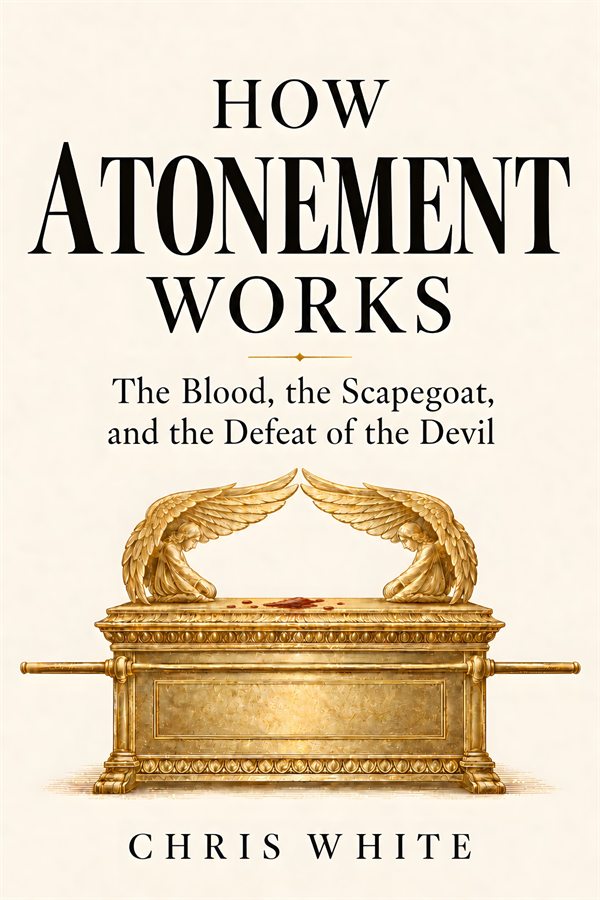
This question opens a larger account. How Atonement Works starts with God’s defiled dwelling and follows it through the blood, the Day of Atonement, Christ’s work as high priest, the scapegoat that carried sins away, and the defeat of the devil.
Get the Paperback on AmazonWhat Happened When It Was Not Cleansed
Ezekiel saw the end of this process. In a vision God carried him to the temple in Jerusalem and showed him idols at the gate, elders burning incense to pictures of creeping things, and men with their backs to the temple worshiping the sun (Ezekiel 8:5–16). God asked him:
Son of man, seest thou what they do? even the great abominations that the house of Israel committeth here, that I should go far off from my sanctuary?
Ezekiel 8:6
The glory left in stages: from the cherub to the threshold, then to the east gate, and then “from the midst of the city” to the mountain on the east side (Ezekiel 10:4, 18–19; 11:23). A few years later the Babylonians burned the empty temple. In Ezekiel’s closing vision the glory returns, and God states the condition of his staying: “my holy name, shall the house of Israel no more defile” (Ezekiel 43:7).
From Exodus to Ezekiel the pattern holds. God dwells among his people, and their uncleanness and sin defile his dwelling. When the defilement is dealt with, he stays. When it is left, he goes. The washings, the offerings, and the blood on the altar and the lid of the Ark were the means God gave so that he could keep living among a people who kept making his house unfit for him.
The Usual Reading: Sacrifice and Guilt
Many Christians have been taught to read Israel’s sacrifices mainly in terms of guilt. On that reading the animal died in the sinner’s place, and its death answered the penalty that sin deserved. Christians who hold this view often quote the second half of Hebrews 9:22, “without shedding of blood is no remission,” as a statement that a death had to be paid. This reading takes sin seriously, and Leviticus does speak of sins being forgiven through the offerings (Leviticus 4:20, 26, 31, 35).
How Atonement Works gives forgiveness its full place and adds what Leviticus says about cleansing. The first half of Hebrews 9:22 speaks of things “purged with blood.” In Leviticus 16 the things the high priest makes atonement for are places: “the holy place,” “the tabernacle of the congregation,” and “the altar” (Leviticus 16:20). The blood went where the defilement was, and the text says the place was cleansed. The result for the people is stated in the language of cleansing: “that ye may be clean from all your sins before the LORD” (Leviticus 16:30). Leviticus names two problems, uncleanness and sin, and the book argues that a full account of the cross has to answer both.
Why Did Heaven Need Cleansing? Hebrews 9:23
Hebrews carries the sanctuary into heaven. The tabernacle Moses built was a copy of “the true tabernacle, which the Lord pitched, and not man” (Hebrews 8:2). Christ entered “into heaven itself, now to appear in the presence of God for us” (Hebrews 9:24). Right after saying that almost all things under the law were purged with blood, the writer adds:
It was therefore necessary that the patterns of things in the heavens should be purified with these; but the heavenly things themselves with better sacrifices than these.
Hebrews 9:23
Interpreters read this verse in several ways. Some take the purifying of the heavenly things as an inauguration, like the new altar Moses purified before any Israelite had brought an offering to it (Leviticus 8:15), since Hebrews has just described the first covenant being dedicated with blood (Hebrews 9:18–21). Some take the heavenly things to mean God’s people themselves, since Hebrews says Christ’s blood purges the conscience (Hebrews 9:14). Others take it to mean that the sins of God’s people affected the true sanctuary, as Israel’s sins affected its copy, and Christ cleansed it.
The book reads the verse within Hebrews’ larger picture. The earthly tent was the copy and the original is in heaven, so what was done with blood in the copy has its counterpart there. Chris White thinks it quite possible, even likely, that Christ did in the true sanctuary what the high priest did in its copy. On the reading of Leviticus 17:11 that the book follows, what atones is the life in the blood, and Christ’s life is now before God. A related article, on the resurrection and forgiveness, explains why that entrance into heaven came after he was raised.
Hebrews also compares the two cleansings directly. The blood of bulls and goats and the ashes of the red heifer “sanctifieth to the purifying of the flesh.” Then the writer asks:
How much more shall the blood of Christ, who through the eternal Spirit offered himself without spot to God, purge your conscience from dead works to serve the living God?
Hebrews 9:14
Hebrews describes this cleansing in terms of death and life: cleansing from “dead works” to serve “the living God.” An animal gave a creature’s life, and it served for a year. Christ poured out his life too, and it was the life of one whom death could not hold (Acts 2:24).
God’s Temple Today
Jesus was himself God’s dwelling. The Word “dwelt among us” (John 1:14), and he spoke of “the temple of his body” (John 2:21). He never needed cleansing. He was “holy, harmless, undefiled, separate from sinners” (Hebrews 7:26). When he touched a leper or a woman with an issue of blood, the uncleanness did not pass to him. The leprosy left and the bleeding stopped (Mark 1:41–42; 5:29).
The New Testament now calls believers God’s temple. Paul writes that “the Spirit of God dwelleth in you” (1 Corinthians 3:16), and he says the same of each believer’s body (1 Corinthians 6:19). The old warning still applies:
If any man defile the temple of God, him shall God destroy; for the temple of God is holy, which temple ye are.
1 Corinthians 3:17
The prophets put cleansing before the gift of the Spirit. God promised through Ezekiel, “Then will I sprinkle clean water upon you, and ye shall be clean,” and then, “I will put my spirit within you” (Ezekiel 36:25, 27). At Pentecost Peter joined the two: “Repent, and be baptized every one of you in the name of Jesus Christ for the remission of sins, and ye shall receive the gift of the Holy Ghost” (Acts 2:38).
Leviticus used two words for what an offering did. For sin, “it shall be forgiven.” For uncleanness, “he shall be clean.” John uses both: “If we confess our sins, he is faithful and just to forgive us our sins, and to cleanse us from all unrighteousness” (1 John 1:9). God’s house in Israel was cleansed so that he could stay there. His people are forgiven and cleansed through Christ so that his Spirit can live in them.
Where This Understanding Comes From
Much of this reading of Leviticus comes from Jacob Milgrom, whose commentary on Leviticus argued that the purification offering cleansed the sanctuary and that defilement reached it in degrees. Jonathan Klawans set out the distinction between ritual and moral impurity. Roy Gane argued that the offerings also cleansed the worshiper, and Richard J. Barry IV surveyed the debate over how impurity was thought to reach the sanctuary. David M. Moffitt applied Milgrom’s reading to Hebrews and Christ’s entrance into the true sanctuary, and Matthew Thiessen studied how the Gospels present Jesus against the sources of impurity. How Atonement Works builds on their work, credits it, and notes where Chris White goes further.