The short answer
On the Day of Atonement one goat’s blood cleansed God’s house, and a second goat carried Israel’s confessed sins out to a land cut off, “for Azazel.” Hebrews says Christ was “once offered to bear the sins of many.” Chris White argues that the devil’s power of death rested on the true charge our sins gave him. When Christ bore those sins away and God forgave them, the accuser had nothing left to bring. His power was broken, and the dead were released.
What Hebrews Says Christ Did Through Death
The letter to the Hebrews gives a reason for the incarnation that many explanations of the cross pass over:
Forasmuch then as the children are partakers of flesh and blood, he also himself likewise took part of the same; that through death he might destroy him that had the power of death, that is, the devil; And deliver them who through fear of death were all their lifetime subject to bondage.
Hebrews 2:14–15
Three verses later the same writer says Christ became “a merciful and faithful high priest in things pertaining to God, to make reconciliation for the sins of the people” (Hebrews 2:17). That verb is related to the one the Greek Bible uses for the high priest’s work in Leviticus 16. The writer who will explain Christ’s priesthood by the Day of Atonement first says that his death disabled the devil.
The Greek verb translated “destroy” means to render powerless, and Peter can still warn that the devil “walketh about” (1 Peter 5:8). What Christ took away was the devil’s power of death. That raises a hard question. If the devil had the power of death, a death looks like his victory, and Luke says that Satan entered Judas (Luke 22:3). How could the death he worked for take his power away?
The Answers Usually Given
The early church had no doubt that Christ conquered death and the devil, though its writers disagreed about how. In the twentieth century Gustaf Aulén called this emphasis Christus Victor. The book holds that the view keeps the victory where Hebrews puts it, in Christ’s death, descent and rising, and leaves unstated what the devil’s power consisted of and what in Christ’s death removed it.
Penal substitution
Penal substitution gives a clear answer. On that account the devil’s power over people is their guilt under God’s law. He can accuse because the charge is true, and the sentence of death stands against the guilty. When Christ bore the penalty in their place, the sentence was carried out and the accusation lost its ground. John Calvin tied Hebrews 2:15 to Christ’s struggle with death in this way.
The book shares much of this. The devil’s accusation does rest on real sin, and forgiveness does remove its ground. The two accounts differ on what removes it. In the penal account a sentence is executed on a substitute. In the book’s account the sins are borne away and forgiven, as they were on the Day of Atonement.
Passover and the destroyer
The scholar David Moffitt reads Hebrews 2:14–15 with Passover in view. He points out that “bondage” and “deliver” are exodus words, and that the one explicit mention of Passover in Hebrews says Moses kept it “lest he that destroyed the firstborn should touch them” (Hebrews 11:28). Exodus names that figure:
For the LORD will pass through to smite the Egyptians; and when he seeth the blood upon the lintel, and on the two side posts, the LORD will pass over the door, and will not suffer the destroyer to come in unto your houses to smite you.
Exodus 12:23
Moffitt shows that the book of Jubilees, written before Christ, took the destroyer to be an evil angel identified with Satan, and he reads Christ’s death and resurrection as the greater exodus. Katie Marcar, in a 2025 article, asks how the defeat was accomplished. She observes that the Day of Atonement ritual, as Leviticus describes it, involves no defeat of the devil, and that the Passover blood shields Israel from the destroyer without disabling him. She also notes the old association between the goat for Azazel and the demon Azazel, and suggests that Hebrews 2:14 may owe more to the Day of Atonement than has often been thought.
The book agrees that Passover is part of what Christ did, and parts from these scholars on the mechanism. In Exodus the destroyer went on through Egypt that night, and Israel’s safety lay in his passing by. The book looks for the disarming in the other half of the Day of Atonement.
The Day of Atonement Had Two Goats
Aaron cast lots over two goats, “one lot for the LORD, and the other lot for Azazel” (Leviticus 16:8). The first was killed, and its blood was carried within the veil to cleanse the holy place “because of the uncleanness of the children of Israel” (16:16). That goat is the one Hebrews describes when it says Christ entered “by his own blood” (Hebrews 9:12). The second goat was “presented alive before the LORD, to make an atonement with him” (16:10). The day was not complete until it had been sent away:
And Aaron shall lay both his hands upon the head of the live goat, and confess over him all the iniquities of the children of Israel, and all their transgressions in all their sins, putting them upon the head of the goat, and shall send him away by the hand of a fit man into the wilderness: And the goat shall bear upon him all their iniquities unto a land not inhabited: and he shall let go the goat in the wilderness.
Leviticus 16:21–22
The Hebrew phrase for bearing iniquity is the same one the Old Testament uses when God forgives: the LORD is “forgiving iniquity and transgression and sin” (Exodus 34:7). When a man carries his own sin he suffers for it. When another carries it, he is free of it. The law states the result: “that ye may be clean from all your sins before the LORD” (Leviticus 16:30).
The Greek translators called this animal the goat “set apart for release,” using aphesis, the word the New Testament uses for the forgiveness of sins. Marcar’s observation holds for the first goat. The second goat is where the book finds the defeat of the devil. The page on why there were two goats on the Day of Atonement walks through the whole rite.
For Azazel: Where the Sins Were Sent
In Hebrew, “for Azazel” has the same form as “for the LORD,” and the two phrases stand side by side as the two lots. Since the LORD is a person, the parallel suggests that Azazel is one too. Jacob Milgrom drew that conclusion, and most scholars today agree. Before Christ, the Book of Enoch describes Azazel as a fallen angel who taught mankind iniquity. God has him bound in the wilderness and all the sins of the earth written over him. The Apocalypse of Abraham, written within a generation or two of the apostles, places Azazel in Eden as the tempter and has Abraham’s corruption pass over to him.
Chris White takes these readings two steps further, and those steps, with the account of the devil’s power given below, make up the book’s synthesis. He identifies Azazel with the one Scripture calls “that old serpent, called the Devil, and Satan” (Revelation 12:9). He reads the goat’s journey as a return to sender: the sins went back to the one who first led humanity into sin and to whom they were already charged. No single text states this synthesis. The book builds it from the texts and sets out each step so that a reader can test it.
Milgrom himself described the goat as returning evil to its source, the netherworld, and the book adds that the source has a name. The goat was no sacrifice (Leviticus 17:7 forbids offerings to the goat-demons of the wilderness), and it gave Azazel nothing he did not already have. The page Who is Azazel in Leviticus 16? sets out the evidence in full.
Christ Carried the Sins Down to the Dead
The New Testament describes Christ in the language of the live goat. Hebrews says he “was once offered to bear the sins of many” (Hebrews 9:28). Isaiah says “the LORD hath laid on him the iniquity of us all” (Isaiah 53:6), and Peter says he “bare our sins in his own body on the tree” (1 Peter 2:24). The book reads these as a real transfer: the sins were placed on him and taken off us. Barnabas and Justin Martyr already saw Christ in both goats.
The goat went out of the camp, and Jesus “suffered without the gate” (Hebrews 13:12). The goat went on to a land cut off, and Paul says Christ “descended first into the lower parts of the earth” (Ephesians 4:9). The book proposes that the goat’s journey was fulfilled when Christ, bearing the sins of the world, went down to the dead, and that the sins went back to their source. The cross cancelled the record against us; the descent carried the sins to their destination and added no further payment. The page on where Jesus took our sins follows that journey through the descent texts.
Why Taking the Sins Away Disarmed the Accuser
Zechariah saw Joshua the high priest with “Satan standing at his right hand to resist him” (Zechariah 3:1), and Revelation calls him “the accuser of our brethren . . . which accused them before our God day and night” (Revelation 12:10). His accusation has force because the sins are real. Paul says that “the sting of death is sin” (1 Corinthians 15:56). From these texts the book concludes that the devil’s power of death rests on sin and on the true charge sin supports. If that is so, taking the sin away breaks the power. Paul describes it happening:
And you, being dead in your sins and the uncircumcision of your flesh, hath he quickened together with him, having forgiven you all trespasses; blotting out the handwriting of ordinances that was against us, which was contrary to us, and took it out of the way, nailing it to his cross; and having spoiled principalities and powers, he made a shew of them openly, triumphing over them in it.
Colossians 2:13–15
Forgiveness comes first in Paul’s sentence. The record against us is blotted out, and then the powers are stripped and led in triumph. The book reads the handwriting as the record of our sins, the case an accuser needs. In Zechariah the LORD answered the charge by removing the filthy garments: “I have caused thine iniquity to pass from thee” (Zechariah 3:4). Revelation says the brethren “overcame him by the blood of the Lamb” (12:11), and Jesus sent Paul to turn the Gentiles “from the power of Satan unto God, that they may receive forgiveness of sins” (Acts 26:18).
This explains the words “through death.” A goat that stayed in the camp could not carry sins away, and a sin-bearer who stayed alive could not go where sins are taken. The devil was paid nothing and no bargain was made with him. The sins set back on his account were his own work, and their return cost him his hold. The pages on how forgiveness defeats Satan and how Jesus defeated the devil by dying take these steps one at a time.
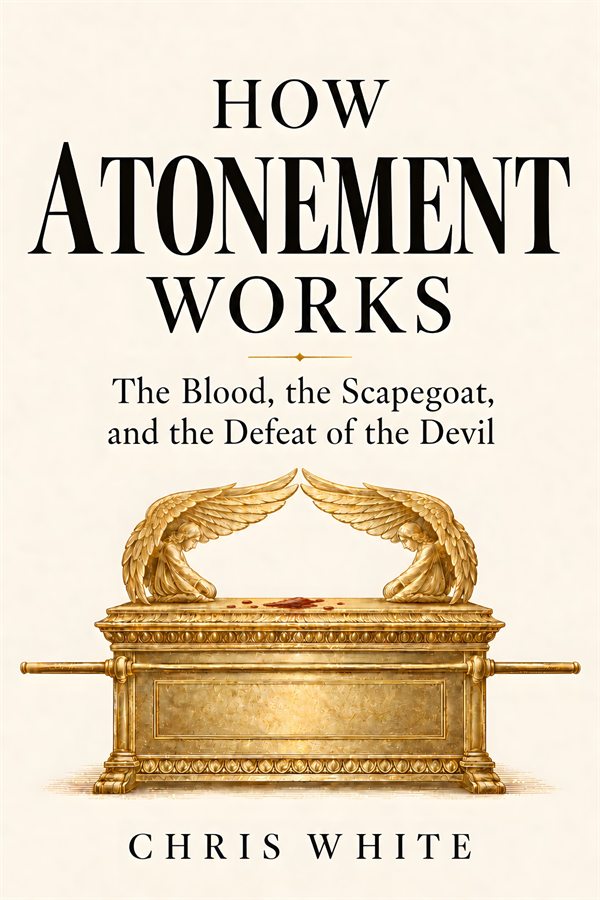
Both goats, one Savior. How Atonement Works follows the Day of Atonement through the work of Christ: the blood brought into God’s presence, the sins carried away, the accuser disarmed, and the dead set free.
Get the Paperback on AmazonThe Release of the Dead and the Year of Jubilee
The first people the disarming reached were the dead. Hosea has God say, “I will ransom them from the power of the grave; I will redeem them from death” (Hosea 13:14). Matthew records that when Jesus died, “the graves were opened,” and saints came out after his resurrection (Matthew 27:52–53). Paul says that Christ “led captivity captive” (Ephesians 4:8), and the risen Christ holds “the keys of hell and of death” (Revelation 1:18). On the book’s account the dead came out because the one who went down among them had just carried away the sins that held them there.
Leviticus ties this release to the Day of Atonement itself. Every fiftieth year the trumpet of the Jubilee sounded “in the day of atonement,” to “proclaim liberty throughout all the land unto all the inhabitants thereof” (Leviticus 25:9–10). The Greek Bible calls the Jubilee the year of aphesis, release, the same word it used for the goat and the word the New Testament uses for forgiveness. Isaiah took the Jubilee’s language for the Servant, who would “proclaim liberty to the captives” (Isaiah 61:1). Jesus read that passage at Nazareth and said, “This day is this scripture fulfilled in your ears” (Luke 4:21).
The Jubilee also shows a release in which the holder is not paid. “And if he be not redeemed in these years, then he shall go out in the year of jubile” (Leviticus 25:54), because Israel belonged to the LORD. Isaiah says the same of the exiles: “ye shall be redeemed without money” (Isaiah 52:3). A Dead Sea Scroll known as 11QMelchizedek, written about a century before Christ, already joined the Jubilee, the Day of Atonement and the forgiveness of sins, and expected captives to be freed from the dominion of Belial by God’s judgment, with nothing paid to their captor. The scroll has no scapegoat and no descent.
One Atonement, Two Goats
The Day of Atonement was one day, and its two goats did one work. Christ fulfilled the first as the living high priest who entered the true sanctuary with his own life and appears before God for us. The page on the resurrection and forgiveness explains that half. He fulfilled the second as the sin-bearer. The sins were laid on him, carried out of the gate and down to the dead, returned to their source and forgiven, so the accuser had nothing to bring and the dead he held were released. In the book’s words, the law showed him in two animals “because no one animal could die and also carry sins away alive.”
The cross is indispensable to all of it. Without the death there would be no sin-bearer outside the gate, nothing carried to the dead, no life to present in heaven, and no record nailed to a cross. The death, the descent, the resurrection and the ascension belong to one saving work.
Renihan and Barry connect the scapegoat with Christ’s descent, and Marcar saw the Day of Atonement behind Hebrews 2:14 alongside Passover. What Chris White adds is an explanation of how the goat’s journey disarms the devil: his power rested on sin, Christ carried our sins back to their source, and God forgave them, so the accusation lost its ground.
Where This Understanding Comes From
Jacob Milgrom’s commentary on Leviticus supplies the reading of Azazel as a personal name and of the goat as returning evil to its source, and Baruch Schwartz and Gary Anderson explain how sin is borne away. Andrei Orlov and Daniel Stökl Ben Ezra trace how ancient readers linked the rite to the defeat of evil. David Moffitt and Katie Marcar frame the question of Hebrews 2:14–15, and Samuel Renihan, Richard Barry and Michael Heiser connect the scapegoat with the realm of the dead. Early writers from Barnabas and Justin Martyr to Origen, Irenaeus and Eusebius taught Christ’s fulfillment of the goats and the release of the dead. How Atonement Works builds on this work and credits it.