The short answer
No. Jesus did give his life “a ransom for many,” and the New Testament calls his blood the price of our freedom. Some early Christian writers concluded that the ransom went to the devil, and others, such as Gregory of Nazianzus, rejected that idea. How Atonement Works argues that the devil held people through the true charge of their sins. When Christ carried those sins away and God forgave them, the charge was gone and the captives went free. The devil received nothing.
What Jesus Said in Mark 10:45
James and John had asked Jesus for the places at his right and left hand in his glory. The other ten disciples were angry with them, and Jesus called them all together. Among the Gentiles, he said, rulers lord it over their people. Whoever wants to be great among his followers must be their servant. Then he gave his own life as the pattern:
For even the Son of man came not to be ministered unto, but to minister, and to give his life a ransom for many.
Mark 10:45
Matthew records the same saying (Matthew 20:28). A ransom was the price that freed a captive or a slave. Jesus used the word for his own death and said that it was “for many.” He named no one who would receive the ransom, and Christians have asked about it ever since.
Ransom and Redemption in the Bible
Ransom belongs to a group of New Testament words drawn from slavery and captivity. Paul writes of Christ, “In whom we have redemption through his blood, the forgiveness of sins” (Ephesians 1:7). Peter tells his readers that they were not redeemed with silver and gold, “But with the precious blood of Christ, as of a lamb without blemish and without spot” (1 Peter 1:18–19). Peter describes Christ’s blood as the price of their freedom.
These passages say three things plainly. People were held captive. Their release cost Christ his life and his blood. And Paul explains the redemption as the forgiveness of sins, joining the two in one phrase.
The Old Testament uses the same language for rescue from death itself. Through Hosea God promised, “I will ransom them from the power of the grave; I will redeem them from death” (Hosea 13:14). The Hebrew for “the power of the grave” is “the hand of Sheol,” and Paul quotes the end of the verse in his chapter on the resurrection (1 Corinthians 15:55).
The Ransom Theory: Paid to the Devil
Many early Christian writers took up Jesus’ words in Mark 10:45 and asked who received the ransom. Some answered that it was paid to the devil, who held humanity captive. Their reasoning came from Scripture. Hebrews says that the devil had “the power of death,” and that people were held in bondage all their lives through fear of death (Hebrews 2:14–15). If the devil held the captives, and Christ gave his life to free them, the ransom seemed to go to the one who held them.
Gregory of Nyssa developed this explanation at length in the late fourth century. He reasoned that the devil would never have accepted God openly, so Christ’s divinity was hidden in his human nature, and the devil took Christ as the ransom without seeing what he had taken. Gregory compared it to a fish that swallows the bait and takes the hook with it. Once life had entered the house of death, death could not keep it, and the darkness was undone.
This account gets a great deal right. It takes the devil seriously, it takes Hebrews 2:14 seriously, and it sees Christ’s death as a victory over the one who held humanity captive.
Most Christians today give a different answer. Penal substitution, the explanation most often preached now, says that the devil’s power over people is their guilt under God’s law. Christ bore the penalty of sin in the place of sinners, the sentence was carried out, and the accusation lost its ground. On that view the penalty was owed under God’s law, and the devil was owed nothing. The main theories of atonement are compared in more detail elsewhere on this site.
The Early Writers Did Not All Agree
The early church agreed that Christ had won the victory over death and the devil. It gave different accounts of how he won it, and the ransom paid to the devil was one account among several.
Irenaeus, a bishop in Gaul writing around AD 180, spoke of Christ’s blood as the price of our redemption, with Christ giving his soul for our souls and his flesh for our flesh. He also said that God won humanity back from the apostasy by persuasion rather than by force, so that justice was kept. He described a war against the enemy who had led humanity captive in Adam, and he set this beside recapitulation, redemption, and the gift of the Spirit without ranking them.
Gregory of Nazianzus belonged to the same circle as Gregory of Nyssa, and he asked plainly to whom the blood shed for us was offered. If it was paid to the devil, he called that an outrage. He also doubted that the Father had demanded it, since the Father would not even accept Isaac when Abraham offered him. Gregory concluded that the Father accepts Christ’s offering without having asked for it or demanded it, and that God acted to deliver us himself, overcome the tyrant, and draw us to himself through his Son.
Centuries later Anselm of Canterbury rejected the idea that the devil had any rightful ownership of human beings, since both the devil and humanity belong to God. Many Christians since have set the early ransom explanations aside because a ransom seems to make the devil a party who is paid. How Atonement Works agrees with that objection, and it keeps the early church’s conviction that Christ defeated the devil. For a wider survey, see what the early church believed about atonement.
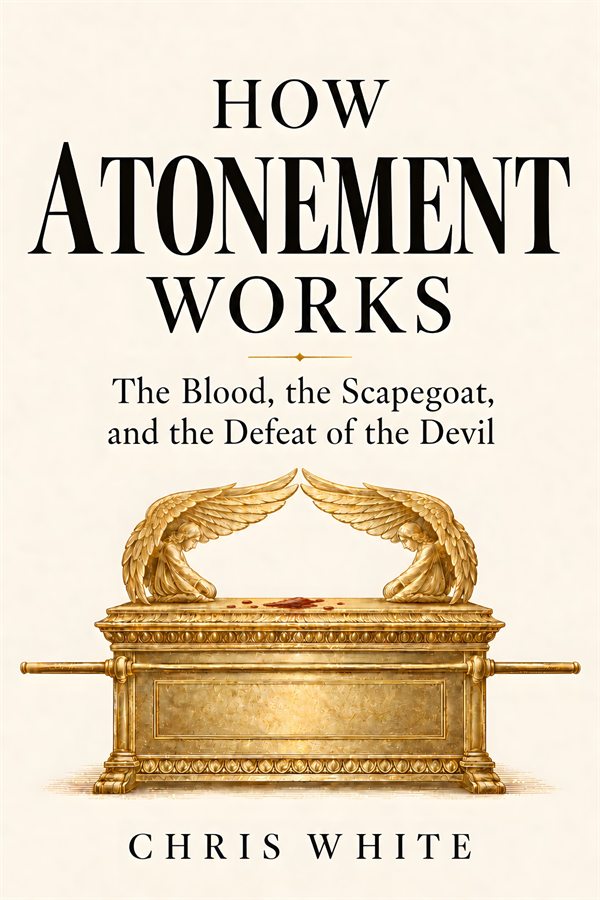
The early church named the victory. This book proposes how it was won. How Atonement Works traces the Day of Atonement through the work of Christ: the blood, the high priest in heaven, the scapegoat that carried sins away, and the defeat of the devil.
Get the Paperback on AmazonHow the Devil Held His Captives
Whether the devil was paid depends on what kind of hold he had on people. Scripture calls him a tempter and an accuser. In Zechariah’s vision Joshua the high priest stands before the angel of the LORD in filthy garments, with “Satan standing at his right hand to resist him” (Zechariah 3:1). Revelation calls the devil “the accuser of our brethren” (Revelation 12:10). Paul writes that “the wages of sin is death” (Romans 6:23) and that “the sting of death is sin” (1 Corinthians 15:56).
From these texts Chris White draws a synthesis that the book presents as his own: the devil’s power of death rested on sin. He tempts people to sin, sin brings death, and he accuses the sinner before God with a charge that is true. On this account he held people as an accuser holds a case. The people themselves belonged to God all along.
If the devil’s power rested on a true charge, it ends when the charge ends. Removing the charge takes the power away, and the accuser needs to be paid nothing.
Released by Forgiveness, With Nothing Paid
Paul describes the release in his letter to the Colossians:
And you, being dead in your sins and the uncircumcision of your flesh, hath he quickened together with him, having forgiven you all trespasses; blotting out the handwriting of ordinances that was against us, which was contrary to us, and took it out of the way, nailing it to his cross; and having spoiled principalities and powers, he made a shew of them openly, triumphing over them in it.
Colossians 2:13–15
Paul’s first words are “having forgiven you all trespasses.” The Greek verb for forgiving is built on the word for grace and means to give freely. Luke uses it of the creditor in Jesus’ parable who had two debtors: “when they had nothing to pay, he frankly forgave them both” (Luke 7:42). The handwriting was a written record that stood against us; in the business papers of Paul’s day the word usually meant a note of debt. God blotted it out, using the word the Greek Old Testament uses when God says, “I, even I, am he that blotteth out thy transgressions” (Isaiah 43:25). Then the principalities and powers were stripped and led in triumph.
The book reads the handwriting as the record of the charges the accuser held. Paul places its cancellation at the cross, where Christ “bare our sins in his own body on the tree” (1 Peter 2:24). A record that has been blotted out is a debt forgiven, and, in the words of the book’s conclusion, “the devil was paid nothing for its cancellation.”
The book also connects the release with the second goat of the Day of Atonement, the goat for Azazel, which carried Israel’s confessed sins away alive to a land cut off (Leviticus 16:21–22). Chris White proposes that Azazel is Satan, and that Christ, as the sin-bearer, carried our sins down to the realm of the dead and returned them to their source. Leviticus forbids Israel to offer sacrifices to devils (Leviticus 17:7), and the goat was sent away alive with nothing offered to Azazel. On this reading the devil got back his own work, the sins he had brought into the world, and with them went the ground of his case. Jesus had said, “the prince of this world cometh, and hath nothing in me” (John 14:30). More on this is in how forgiveness defeats Satan.
The Jubilee: Captives Freed Without Paying the Captor
The law of Moses shows how a captive could go free with nothing paid to the one who held him. An Israelite who had sold himself into service could be redeemed by a kinsman who paid the price. If no one redeemed him, the Jubilee released him anyway:
And if he be not redeemed in these years, then he shall go out in the year of jubile, both he, and his children with him. For unto me the children of Israel are servants; they are my servants whom I brought forth out of the land of Egypt: I am the LORD your God.
Leviticus 25:54–55
The man who held him received nothing. His claim ended because a higher authority had declared the year, and the reason God gave was ownership: the people were his. Isaiah says the same of the exiles: “Ye have sold yourselves for nought; and ye shall be redeemed without money” (Isaiah 52:3).
The Jubilee trumpet was sounded “in the day of atonement” (Leviticus 25:9). The Greek translators called the Jubilee the year of release, using aphesis, the New Testament’s word for the forgiveness of sins. When Jesus read Isaiah’s promise of “deliverance to the captives” in the synagogue at Nazareth, he said, “This day is this scripture fulfilled in your ears” (Luke 4:18, 21). A Jewish text from about a century before Christ, the Dead Sea scroll known as 11QMelchizedek, read the same passages as a promise that God’s people, held under the dominion of Belial, would be released on a Day of Atonement, with their iniquities forgiven and nothing paid to the captor.
So the Bible’s ransom language and the book’s answer fit together. The release cost Christ his life and his blood. The captor received nothing. His claim was ended over his head by the God to whom the captives had always belonged.
Where This Understanding Comes From
The question of who received the ransom is as old as the church, and How Atonement Works draws on the people who have argued it. The book discusses Irenaeus, Gregory of Nyssa, and Gregory of Nazianzus on the ransom, Origen on the scapegoat and the powers, and Anselm’s rejection of any rightful claim by the devil. Gustaf Aulén gave the name Christus Victor to the early church’s emphasis on Christ’s victory. Calvin, commenting on Colossians 2:15, identified the disarmed powers as devils who can no longer bring anything against believers. Katie Marcar and David M. Moffitt have written on how Hebrews 2:14–15 describes the defeat of the devil through death, Daniel Stökl Ben Ezra has studied the Day of Atonement and 11QMelchizedek in early Judaism and Christianity, and Samuel Renihan and Richard Barry connect the scapegoat with Christ’s descent to the dead.
Chris White’s contribution is the proposed mechanism: the devil’s power of death rested on the true charge of sin, and it ended when Christ carried the sins away and God forgave them. The book presents this as one Christian explanation among several, builds it on this earlier work, and credits it.