The short answer
Christians have identified the spirits in prison in three main ways. Augustine thought Christ, by the Spirit, preached through Noah to people who were dead by Peter’s time. Many early church writers held that Christ preached to the dead between his death and resurrection. A common reading today takes them as the angels who sinned in Noah’s time and kept in chains. How Atonement Works treats the hearers as disputed and builds on what Peter makes plain: the proclamation came between Christ’s death and his enthronement over the angels and powers.
What Peter Wrote in 1 Peter 3:18–20
Peter is writing to Christians who suffer for doing good. He encourages them with the example of Christ, who also suffered, and then he follows Christ from the cross to the throne:
For Christ also hath once suffered for sins, the just for the unjust, that he might bring us to God, being put to death in the flesh, but quickened by the Spirit: By which also he went and preached unto the spirits in prison; Which sometime were disobedient, when once the longsuffering of God waited in the days of Noah, while the ark was a preparing, wherein few, that is, eight souls were saved by water.
1 Peter 3:18–20
Peter goes on to compare the flood with baptism, which “doth also now save us . . . by the resurrection of Jesus Christ” (1 Peter 3:21). He ends with Christ “gone into heaven,” on the right hand of God, with “angels and authorities and powers being made subject unto him” (1 Peter 3:22).
Several points in the passage are clear. Christ died for sins once. He was put to death in the flesh and made alive by the Spirit. He went and preached. The hearers are called spirits, they are in prison, and their disobedience belongs to the time when Noah was building the ark. The passage ends with Christ enthroned and the powers subject to him. The disagreement concerns who the spirits were, when Christ preached to them, and what he preached.
The Prison and the Place of the Dead
The New Testament speaks of more than one place under the earth. The King James Version uses “hell” for three different Greek words. Gehenna is the place of final punishment, “where their worm dieth not, and the fire is not quenched” (Mark 9:44). Hades is the place where the dead are, called Sheol in the Old Testament. The third word appears once, when Peter says in his second letter that God cast the angels that sinned down to tartarus and “delivered them into chains of darkness, to be reserved unto judgment” (2 Peter 2:4).
Scripture never says that Christ went to gehenna. When the Apostles’ Creed says that he “descended into hell,” it means the realm of the dead. The difference between these places, and the history of the creed’s line, are explained more fully in Did Jesus Descend into Hell? Each reading of 1 Peter 3 has to decide whether Peter’s “prison” is Hades, where dead human beings are, or the place where the angels who sinned are kept.
Reading One: Christ Preached Through Noah
Augustine proposed that Christ preached to these spirits in Noah’s own lifetime. Christ, in the Spirit, spoke through Noah to the people of his generation while the ark was being built. They refused to listen. By the time Peter wrote, they had died and were in prison, so Peter calls them spirits in prison according to their condition when he wrote.
This reading has support elsewhere in Peter’s letters. In his second letter Peter calls Noah “a preacher of righteousness” (2 Peter 2:5), and in his first letter he says that the prophets spoke by “the Spirit of Christ which was in them” (1 Peter 1:11). The patience of God in Noah’s day fits a time of preaching and warning before judgment came. Augustine himself believed that Christ went down to the dead. He read this one verse as a description of Noah’s time.
The main difficulty is the order of Peter’s sentence. Christ is put to death, made alive, and then “went and preached.” The going seems to follow the death, which is why most readers before and after Augustine placed the preaching after the cross.
Reading Two: Christ Preached to the Dead
Many of the early church fathers read the passage as Christ’s preaching among the dead between his death and his resurrection. Irenaeus, in the second century, wrote that the Lord went down into the regions beneath the earth and preached his coming there also, declaring the remission of sins to those who believed in him. Ignatius wrote that Christ raised the prophets who had waited for him. On this reading the spirits in prison are human dead, and Peter names Noah’s generation among them.
The reading fits the wider New Testament witness to Christ among the dead. Peter preached on the day of Pentecost that Christ’s soul was not left in hell (Acts 2:27–31). Paul says that Christ “descended first into the lower parts of the earth” before he ascended (Ephesians 4:9). The risen Christ told John that he has “the keys of hell and of death” (Revelation 1:18).
John Calvin took a related view. He rejected the idea of an underground prison of the fathers, but he read Peter’s words as meaning that the power of Christ’s death was made known to the dead, to the comfort of the righteous and the conviction of the wicked.
Reading Three: Christ Proclaimed Victory to Fallen Angels
A common reading today takes the spirits as angels. Peter’s second letter and the letter of Jude both speak of angels who sinned and are now kept in prison:
The angels which kept not their first estate, but left their own habitation, he hath reserved in everlasting chains under darkness unto the judgment of the great day.
Jude 6
The Book of Enoch, which Jude quotes (Jude 14–15), tells the story of those angels. It retells Genesis 6, where “the sons of God” took wives from among men in the days before the flood. It names Semjaza as their leader and says that Azazel was bound in the wilderness until the day of judgment. Peter places the disobedience of his spirits “in the days of Noah,” and he and Jude both speak of angels held in chains. The angels’ disobedience in Noah’s time and their imprisonment connect Peter’s account with that story, and they are the main reason many readers identify Peter’s spirits with these angels.
On this reading Christ’s preaching was a proclamation of victory, an announcement to the rebel powers that their defeat had come. Readers who hold it disagree about the timing. Some, such as the notes in the Reformation Study Bible, place the proclamation at Christ’s ascension, as he passed on his way to heaven. Samuel Renihan also identifies the spirits as imprisoned angels, but he places Christ’s proclamation during his descent to the dead, before his resurrection.
What About 1 Peter 4:6?
A chapter later, Peter speaks of Christ as the one who is “ready to judge the quick and the dead” (1 Peter 4:5), and then he adds:
For for this cause was the gospel preached also to them that are dead, that they might be judged according to men in the flesh, but live according to God in the spirit.
1 Peter 4:6
This verse raises a separate question. Some interpreters understand “them that are dead” as Christians who heard the gospel while they were alive and had since died. Men judged them in the flesh, and some had died, yet they would live before God. Others connect the verse with 1 Peter 3:19 and read it as a further reference to Christ’s proclamation among the dead.
Neither verse is a basis for promising anyone a second chance after death. The Noah reading places the preaching in the hearers’ lifetime. The angel reading makes the hearers fallen angels. The early writers who read the passage as preaching to the dead were speaking of the dead before Christ came, many of them the righteous who had waited for him.
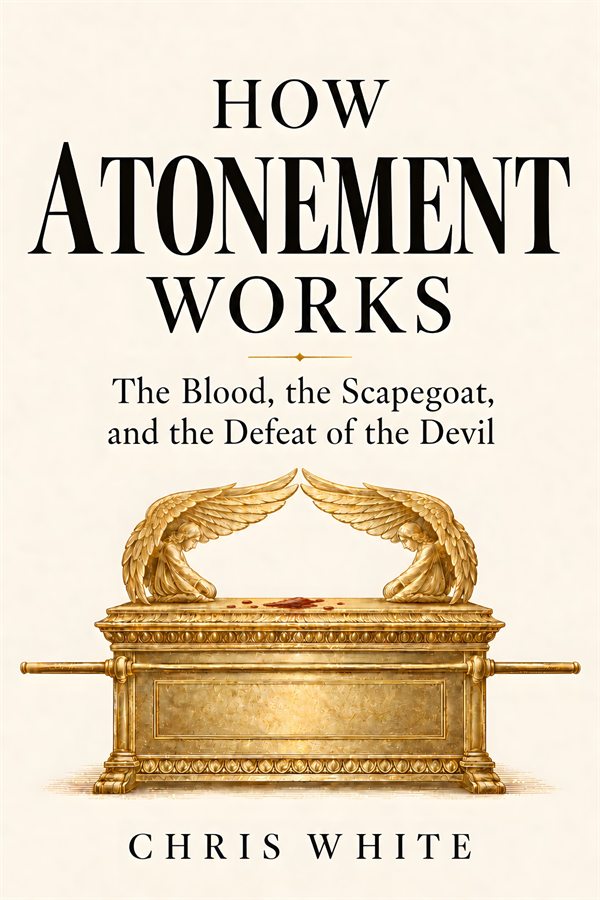
This passage is one part of a larger account. How Atonement Works follows Christ from the cross to the dead and out again: where the sins he bore were taken, how forgiveness disarmed the accuser, and why death could not hold him.
Get the Paperback on AmazonHow the Book Reads the Passage
How Atonement Works sets out all three readings and does not make its argument depend on any one identification of the spirits. Chris White reads Peter as describing what Christ did between his death and his enthronement. Christ was put to death in the flesh, was made alive in the Spirit, and went and preached. The passage then ends with him gone into heaven, at God’s right hand, with angels and authorities and powers subject to him.
On that reading the preaching came after Christ was put to death, so the book places it with the other passages that speak of Christ among the dead. Peter’s Pentecost sermon says that his soul was not left in hell. Jesus said that the Son of man would be three days and three nights “in the heart of the earth” (Matthew 12:40), as Jonah was. Paul says that he descended before he ascended. In each of these texts Christ acts or God vindicates him. None describes him suffering among the dead or being held there against his will. His suffering was on the cross, where he said, “It is finished.” He went among the dead as a victor in the enemy’s own territory, and he came out holding the keys.
Chapter 16 of the book returns to the passage and keeps the hearers an open question. Whether they were the dead of Noah’s day or the angels who sinned in his time, Peter places a proclamation by Christ between his death and his enthronement. The passage that begins with the spirits in prison ends with all the powers subject to him.
The Proclamation and Christ’s Victory
The book places this proclamation within a larger account of how Christ defeated death and the devil. Hebrews says that Christ took part in flesh and blood “that through death he might destroy him that had the power of death, that is, the devil” (Hebrews 2:14). Paul says that God, “having forgiven you all trespasses,” blotted out the handwriting that was against us and “spoiled principalities and powers” (Colossians 2:13–15).
Chris White proposes that the devil’s power of death rested on the true charges that sin gave him as the accuser. On the Day of Atonement the live goat carried Israel’s sins away from the camp. The book argues that Christ, having borne our sins on the cross, carried them down to the dead, and that forgiveness left the accuser with nothing to charge. That is the book’s own synthesis, built from the texts on Christ’s sin-bearing and his descent.
Within that account the dead of the old covenant were released. Matthew records that when Jesus died “the graves were opened; and many bodies of the saints which slept arose” (Matthew 27:52). Paul says that when Christ ascended “he led captivity captive” (Ephesians 4:8). The old English name for this release is the harrowing of hell, described more fully in What Is the Harrowing of Hades? Irenaeus joined Christ’s preaching among the dead to the remission of sins. The book offers a reason the two go together: the one who went down among the dead had just carried away the sins that held them there.
Peter’s proclamation belongs to that picture of victory whichever reading of the hearers is correct. Christ went where the dead were held or where the rebel angels were kept, he proclaimed, and he was then enthroned with every power subject to him.
Where This Understanding Comes From
The readings on this page have a long history. Augustine set out the Noah reading in a letter to Evodius. Ignatius and Irenaeus wrote in the second century of Christ’s activity among the dead, and Calvin gave his own account of the proclamation in the Institutes. Richard Bauckham has studied the ancient Jewish and Christian writings about the dead. Samuel Renihan’s primer and reader on the descent of Christ argues that the spirits are imprisoned angels and that Christ proclaimed his victory to them during his descent. The Reformation Study Bible represents those who place the proclamation at the ascension, and R. H. Charles’s translation of the Book of Enoch gives the story of the angels behind Jude and 2 Peter. How Atonement Works draws on this work and credits it in its notes.