The short answer
Yes. The devil tempts people into sin and then accuses them of it, and a true charge of sin carries a sentence of death. How Atonement Works argues that this is the “power of death” Hebrews 2:14 assigns to him: a hold on people that rests on their sins and lasts while the charge stands. Chris White further proposes that the devil’s rule over the world grows the same way, one person at a time. Forgiveness in Christ removes the charge and moves a person into Christ’s kingdom.
What the Bible Says About Satan’s Authority
Scripture gives the devil a real authority in the present age. Jesus called him “the prince of this world” (John 12:31; 14:30). Paul calls him “the god of this world” who “hath blinded the minds of them which believe not” (2 Corinthians 4:4). John writes that “the whole world lieth in wickedness” (1 John 5:19), and the Greek says the world lies in the evil one.
In the wilderness the devil showed Jesus the kingdoms of the world and said they had been “delivered unto me, and to whomsoever I will I give it” (Luke 4:6). The claim comes from a liar, so it cannot stand alone. Jesus did not dispute it, though, and the other texts say much the same thing. Paul describes the Christian’s struggle in the same terms:
For we wrestle not against flesh and blood, but against principalities, against powers, against the rulers of the darkness of this world, against spiritual wickedness in high places.
Ephesians 6:12
Paul also describes salvation as a rescue out of that realm. The Father “hath delivered us from the power of darkness, and hath translated us into the kingdom of his dear Son” (Colossians 1:13). A rescue of that kind assumes there was a power of darkness to be rescued from.
So the question is a fair one. If the devil rules in this age, how did he come to rule, and does human sin add to his hold?
Common Answers to the Question
Christians have answered in several ways. One common answer is that the devil’s power comes from his own strength as a fallen angel, and that he rules the world by deception. On that view sin harms the sinner and grieves God, and it gives the devil nothing he did not already have.
Another widely taught answer goes back to Eden. God gave Adam dominion over the earth (Genesis 1:28), and many teachers hold that when Adam listened to the serpent he handed that dominion over, so that the devil became the ruler of the world at the fall.
A third answer looks to the nations. Michael Heiser and others have drawn attention to Old Testament passages in which the nations were placed under spiritual beings (Deuteronomy 32:8–9; Psalm 82), and they read the New Testament’s principalities and powers against that background. How Atonement Works recognizes this larger discussion and deliberately leaves it aside.
Much Western teaching gives the devil little place in the explanation at all. Since Augustine, many Christians have been taught that inherited human corruption explains why everyone sins, and since Anselm in the eleventh century, much of Western theology has explained the cross without reference to the devil. On that account sin and the devil’s power are two separate subjects.
Each of these answers has its defenders and its texts. Chris White proposes an account that ties the devil’s power directly to sin, because Hebrews and Colossians tie his defeat directly to the removal of sin.
How Sin Gives the Devil a Hold on a Person
The book begins with the two things Scripture most often says the devil does. He is “the tempter” (Matthew 4:3; 1 Thessalonians 3:5). He is also “the accuser of our brethren . . . which accused them before our God day and night” (Revelation 12:10). His Hebrew name, satan, means adversary, and in Job and Zechariah he appears by that name in a court before God.
Accusation follows temptation. Having tempted a person into sin, he accuses the person of it. Zechariah saw Joshua the high priest “clothed with filthy garments,” with Satan standing at his right hand “to resist him” (Zechariah 3:1–3). The charge was true, and that is what makes the accuser dangerous. If his charges were false, God could dismiss them, and no atonement would be needed.
Scripture joins sin and death from the garden onward. “The wages of sin is death” (Romans 6:23). “The sting of death is sin” (1 Corinthians 15:56). And Hebrews says that Christ took flesh and blood “that through death he might destroy him that had the power of death, that is, the devil” (Hebrews 2:14).
Chris White joins these statements into one chain, and he presents the chain as his synthesis of the texts. The devil tempts. A person who knows good and evil sins. Sin carries death. The devil brings the true charge, and so he holds a power of death over that person: an authority conditioned on sin, exercised by accusation, and permitted by God for as long as the charge stands.
On that account the answer to this page’s question is yes. Each sin the devil brings about gives him a charge he can press. The page Why Does Satan Want People to Sin? covers this part of the argument in brief, and What Does It Mean That the Devil Had the Power of Death? looks closely at Hebrews 2:14.
From a Hold on Persons to a Rule Over the World
A power that rests on charges against people, one sinner at a time, sounds smaller than the dominion the New Testament describes. The devil claimed the kingdoms of the world. Paul calls him “the god of this world.” Believers are rescued from a “power of darkness.” How did a charge against persons become a rule over nations?
Chris White’s answer goes a step beyond the synthesis above. It is a further proposal, and he calls it speculative: “My answer is speculative, but I think something like it must be true.” The book’s account of how Christ defeated the devil stands without it.
The proposal is simple. Nations are made of people. If the devil holds people through their sins, then he holds, by proxy, whatever those people hold. The kingdoms of the world are his in the same measure that the people in them are under his charge.
The proposal also gives the devil a motive that fits what he does in Scripture. Every sin he can bring about extends his holding. His dominion grows one person at a time. And every conversion takes a piece of it back, because Paul describes conversion as a change of kingdoms.
The book states the claim narrowly. In its words, “the devil’s hold on the world, whatever more may be said of it, runs through his hold on sinners.” That puts his rule over the world on the same ground as his power of death: sin, charged and unforgiven.
The Limits of the Devil’s Hold
Everywhere Scripture shows the devil’s authority, it shows the limits on it. In Job he receives leave to act, and the leave has a boundary:
And the LORD said unto Satan, Behold, all that he hath is in thy power; only upon himself put not forth thine hand. So Satan went forth from the presence of the LORD.
Job 1:12
Jesus told Peter that Satan had desired to sift him as wheat, and that he had prayed for him (Luke 22:31–32). The kingdoms the devil claimed had been “delivered unto” him by someone else. The whole world may lie in the evil one, yet “the earth is the LORD’s” (Psalm 24:1).
The book compares the devil’s power to an accuser’s case. He can press it only where there is something to press, and only before a judge who permits him to speak. Nothing is owed to him. God is neither his debtor nor his partner.
The dominion proposal should be read in that light. It describes a hold that reaches only as far as the charge it rests on. It gives the devil no title to anyone’s house, land or goods, and no contract with God. Each person answers for his own sins (Ezekiel 18:20), and the remedy for sin is forgiveness, which God gives freely to those who come to Christ.
Scripture also warns against reading the devil’s hand or hidden sin into a person’s troubles. Job suffered as a man God himself called upright (Job 1:8), and God rebuked the friends who blamed his suffering on his sin (Job 42:7). Illness, loss and hardship come to faithful people in this world, and they are no measure of a person’s standing with God.
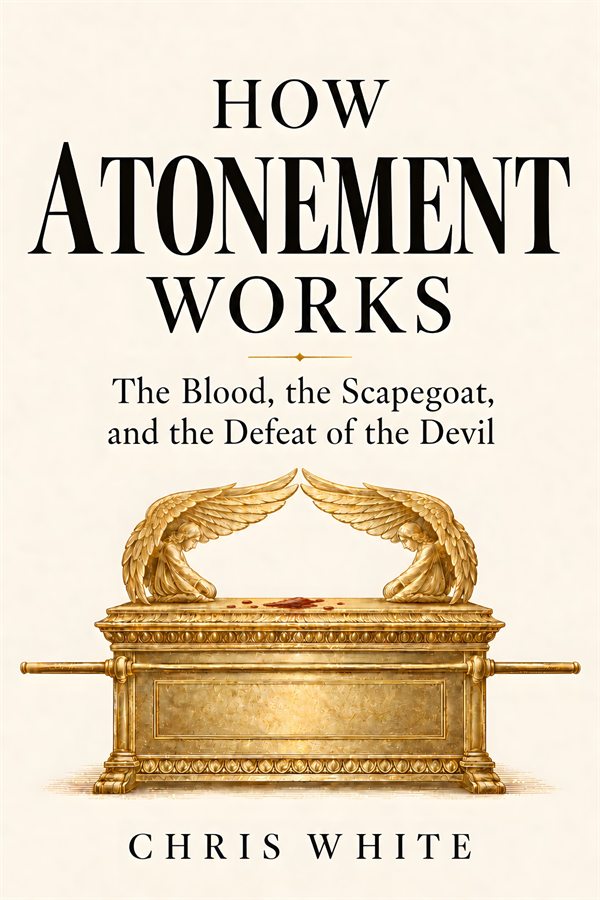
This question leads into the book’s central argument. How Atonement Works explains how Christ “through death” destroyed the one who had the power of death, by following the Day of Atonement: the blood, the scapegoat that carried sins away, and the risen high priest in heaven.
Get the Paperback on AmazonConversion: A Change of Kingdoms
The New Testament describes the way out in the language of kingdoms, and it joins the rescue to forgiveness:
Who hath delivered us from the power of darkness, and hath translated us into the kingdom of his dear Son: in whom we have redemption through his blood, even the forgiveness of sins.
Colossians 1:13–14
Deliverance from a power and the forgiveness of sins are named as one redemption. Jesus described Paul’s mission to the Gentiles the same way:
To open their eyes, and to turn them from darkness to light, and from the power of Satan unto God, that they may receive forgiveness of sins, and inheritance among them which are sanctified by faith that is in me.
Acts 26:18
Turning from Satan’s power and receiving forgiveness are one turning. If the devil’s hold rests on sin, the two belong together. When the sins are forgiven, the charge is gone, and the hold goes with it.
The book’s chapter on faith describes the human side of that turning. Jesus began his preaching with these words: “The time is fulfilled, and the kingdom of God is at hand: repent ye, and believe the gospel” (Mark 1:15). Repentance leaves one master, and faith comes under another. Paul puts it in the language of slavery:
Know ye not, that to whom ye yield yourselves servants to obey, his servants ye are to whom ye obey; whether of sin unto death, or of obedience unto righteousness?
Romans 6:16
Chris White reads saving faith as belief in the gospel, trust in Christ, and allegiance to Jesus as the risen King. A person who believes that Christ reigns and comes under his rule has been moved out of the devil’s dominion. On the proposal above, each such person is a piece of the devil’s holding taken back.
How Forgiveness Takes the Hold Away
Zechariah’s vision shows how the accuser is answered. The LORD answers him by having Joshua’s filthy garments taken away:
Take away the filthy garments from him. And unto him he said, Behold, I have caused thine iniquity to pass from thee, and I will clothe thee with change of raiment.
Zechariah 3:4
Paul describes the same answer given at the cross:
And you, being dead in your sins and the uncircumcision of your flesh, hath he quickened together with him, having forgiven you all trespasses; blotting out the handwriting of ordinances that was against us, which was contrary to us, and took it out of the way, nailing it to his cross; and having spoiled principalities and powers, he made a shew of them openly, triumphing over them in it.
Colossians 2:13–15
The record of sins was blotted out in forgiveness, and the principalities and powers were stripped and led in triumph. John Calvin, who read other parts of the passage differently, took these powers to be devils who could no longer bring anything against believers.
On the book’s account, this is how the cross defeated the devil. His power over a person rested on that person’s sins. When the sins were carried away and forgiven, the charge was gone, and the one who “had the power of death” had nothing to press against those in Christ. Revelation says the brethren “overcame him by the blood of the Lamb” (Revelation 12:11). Nothing was paid to the devil, and no bargain was made with him. A shorter account of this step is on the page How Does Forgiveness Defeat Satan?
Why the Devil Is Still Active
After the resurrection the New Testament still treats the devil as active. He blinds the minds of unbelievers (2 Corinthians 4:4). He goes about “as a roaring lion . . . seeking whom he may devour” (1 Peter 5:8). Believers are told to resist him (James 4:7).
If his power is a hold on people through their sins, this is what we should expect. What Christ’s death took from him was the charge against those who are in Christ. Over those who remain under the charge his activity goes on, within the same limits as before, until he is thrown into the lake of fire (Revelation 20:10).
Believers are still tempted, because the tempter is still permitted to test, and the testing still counts. John writes that “if we say that we have no sin, we deceive ourselves” (1 John 1:8). He also writes that a believer who sins has “an advocate with the Father, Jesus Christ the righteous” (1 John 2:1). The sins of those in Christ are forgiven, and the accuser has no sentence of death to press against them.
Where This Understanding Comes From
The titles tempter and accuser come from Scripture. Jewish writers before Christ connected death with the devil’s envy (Wisdom of Solomon 2:24) and pictured the chief of the evil spirits acting by God’s permission (Jubilees 10). Among the Dead Sea Scrolls, the text known as 11QMelchizedek describes God’s people held under the dominion of Belial and set free, with their iniquities forgiven, on a Day of Atonement. Early Christian writers widely proclaimed Christ’s victory over death and the devil, and Origen connected the powers of Colossians 2:15 with the scapegoat of Leviticus 16. John Calvin identified those powers as devils. Michael Heiser has written at length on the nations and the spiritual powers set over them. David M. Moffitt and Katie Marcar have written on the devil’s defeat in Hebrews 2, and Matthew Bates on faith as allegiance.
Chris White’s contribution is the way he connects these pieces: a power of death that rests on true accusation, a rule over the world that runs through the same hold, and forgiveness that removes its ground. The dominion proposal is his own, and How Atonement Works credits the sources it builds on and marks where it goes beyond them.