The context of Ezekiel 33–39
See how regathering, covenant renewal, messianic rule, security, fruitfulness, and the defeat of Gog form one restoration movement.
A new book by Chris White
Ezekiel 38–39 and Revelation 20:7–10
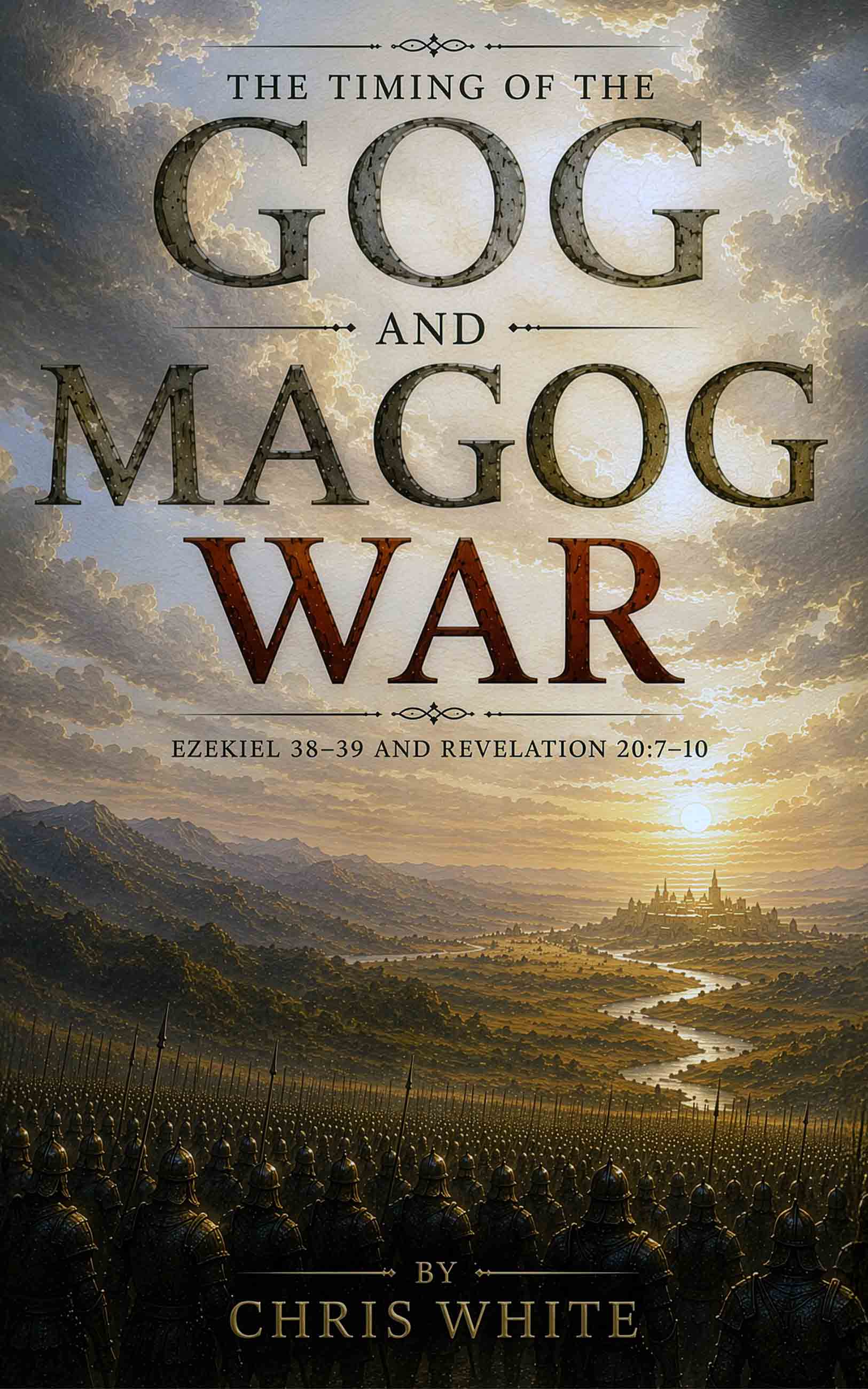
The prophecy is famous. Its timing is not settled. This unusually comprehensive study brings the biblical texts, ancient geography, major objections, and more than fifty years of scholarship into one clear, readable argument.
Available through Amazon. No email signup is required.
Why another book on Gog and Magog?
Whenever international tensions rise, Ezekiel 38 returns to the headlines. Yet respected interpreters have placed the invasion at nearly every point on the end-times timeline. Familiarity has often been mistaken for consensus.
A complete investigation
The timing question receives priority, but the book follows the evidence through every major part of the prophecy. Nothing important is treated as a footnote.
See how regathering, covenant renewal, messianic rule, security, fruitfulness, and the defeat of Gog form one restoration movement.
Trace Magog, Meshech, Tubal, Gomer, Beth-togarmah, Persia, Cush, Put, Sheba, Dedan, and Tarshish before jumping to modern headlines.
Consider a human ruler, a title, the Antichrist, Satan, or a supernatural principality, while distinguishing strong conclusions from open possibilities.
Examine the unwalled villages, restored waste places, prosperity, wooden weapons, seven years of fuel, seven months of burial, and the Valley of Hamongog.
Take the bird-feast imagery and the strongest Armageddon arguments seriously, without assuming that a genuine biblical parallel must exhaust the prophecy.
Ask why John uses the names Gog and Magog, places the event after the thousand years, directs it toward the beloved city, and ends it with fire from heaven.
Scholarship made readable
This book brings readers into the serious academic discussion without burying the argument in technical language. It explains what major scholars actually argued, where they agreed, and where the conversation went afterward.
A Hebrew scholar reexamines the prophecy’s context, rejects popular sound-alike geography, and takes both Revelation 19 and Revelation 20 seriously.
A dispensational Hebraist traces Israel’s restoration theology and argues that the invasion belongs after the thousand years.
A major monograph studies Ezekiel 38–39 as a scriptural background for both Revelation 19:17–21 and Revelation 20:7–10.
The book surveys later commentaries, critical scholarship, the Russia debate, the Turkish turn, supernatural readings, and the arguments still left unanswered.
Where the evidence leads
Chris White argues that Armageddon genuinely anticipates the Gog and Magog pattern, especially through Revelation 19’s use of Ezekiel’s imagery. But Armageddon does not exhaust the prophecy. The fullest fulfillment occurs after the Millennium, where Revelation 20 explicitly uses the names Gog and Magog and gives the event a timestamp.
“The thesis stated here is a destination and a working proposal, not a substitute for the journey.” From the book’s introduction
Who this book is for
No formal theological education is required. The book is designed for readers who want more than a prophecy chart but do not want scholarship hidden behind academic fog.
Common questions
A few direct answers about the book’s scope, conclusion, and level of difficulty.
It argues that Armageddon is a genuine anticipatory fulfillment of Ezekiel’s prophecy, but that the ultimate fulfillment takes place after the thousand years in Revelation 20:7–10.
No. The author is premillennial. The phrase means that the final Gog and Magog rebellion occurs after Christ’s literal thousand-year reign, exactly where Revelation 20 places it.
Yes. It studies the ancient evidence for every major nation in the coalition, including the claims that Rosh means Russia, Meshech means Moscow, and Tubal means Tobolsk. Ancient geography comes before modern application.
Yes. It considers Gog as a human ruler, a title, the Antichrist, Satan, or a supernatural principality. The timing argument does not depend on claiming more certainty about Gog’s personal identity than the evidence allows.
No. Hebrew, Greek, ancient geography, and scholarly debates are explained in clear language. Readers who want the details will find them, but the argument remains accessible from beginning to end.
The landing page is prepared for both paperback and Kindle purchase links on Amazon. Use the buttons on this page to select the format you prefer.
Follow the evidence from Ezekiel’s restoration promises to Revelation’s final rebellion, and decide for yourself where the Gog and Magog war belongs.